By Mark Chan, PhD, and Dennis P. Stolle, JD, PhD
In the workplace, talk about AI readiness tends to focus on technology, skills, knowledge, training, and policies. Less discussed are the psychological capacities workers need to adapt to AI-driven change, and how these capacities can be developed. PsyCap brings together four such capacities:
-
- Hope: having the motivation to pursue goals and identifying paths forward.
- Efficacy: belief in one’s ability to succeed.
- Resilience: bouncing back from setbacks.
- Optimism: having realistic, positive expectations about the future.
This year, the American Psychological Association’s (APA) annual Work in America (TM) survey explored PsyCap in the American workforce and how an individual’s PsyCap level relates to how they are adapting to AI-driven changes.
Growing AI Use, Worker Concerns
Internally, our team at APA sometimes jokes that the advent of AI should really have been about robots preparing our meals, doing the dishes, and folding the laundry. Instead, much of the conversation has centered on how generative AI tools have begun to take on the office and knowledge work that human workers have done—writing, planning, designing.
In our survey, intentional daily AI use at work more than doubled, from 10% in 2024 to 24% in 2026. Alongside this growing use, many workers report concerns. In 2026, among all workers:
-
- 37% worry they will fall behind coworkers if they do not use AI.
- 48% worry AI could make some or all of their job duties obsolete.
- 64% believe technological change helps employers more than workers.
Whether workers use AI by choice or because they have to, many face questions about both the tools and their careers. Being ready for AI means more than knowing how to use it. It also means figuring out how to adapt, whether current skills will stay valuable, and where workers fit in a changing world of work.
What the Survey Shows About PsyCap and AI
We measured PsyCap using a validated five-item questionnaire and grouped workers into relatively low, moderate, and high PsyCap categories based on their scores. We found clear differences between workers with high and low PsyCap.
Compared with workers with low PsyCap, those with high PsyCap were more likely to:
-
- Intentionally use AI daily at work: 32% vs. 14%.
- Say technology created new opportunities in their role or career: 64% vs. 47%.
- Feel confident their employer would retrain them if AI replaced their current duties: 70% vs. 51%.
- Say AI improved their productivity, time management, work quality, and creativity (among workers who use AI).
Beyond AI, workers with higher PsyCap also reported feeling more valued and more confident about the future, with healthier relationships at work and less workplace stress.
An important note: This survey captures one moment in time. It shows associations, not cause and effect. We cannot tell whether PsyCap helps workers adapt to AI or whether good experiences with AI build PsyCap. Workplace conditions could also contribute to both, and reciprocal relationships are possible. The same caution applies to the survey’s broader findings about PsyCap and workers’ experiences on the job.
Rethinking Readiness
Together, these patterns suggest PsyCap may play a role in how workers make sense of and respond to technological change. They point to a broader view of AI readiness that looks at workers’ psychological capacities alongside their technical skills:
-
- Hope: Can workers see paths through the changes AI brings and feel motivated to pursue them?
- Efficacy: Do they believe they can learn to use AI?
- Resilience: Can they recover from setbacks as they learn new ways of working?
- Optimism: Can they maintain realistic, positive expectations as they navigate AI-driven change?
Workplace Conditions Matter
Preparing workers for AI does not mean telling them to “be resilient.” Workplace conditions also shape workers’ opportunities to develop and draw on their psychological capacities.
Jobs differ in how much AI affects them and how much risk it brings. Workers also differ in their access to AI and in the training, tools, and support their organizations provide. These circumstances matter when interpreting differences in workers’ experiences with AI. Workers’ AI concerns may reflect their circumstances, not just how optimistic or resilient they are.
PsyCap may help us understand how workers experience and adapt to AI. It should never become a way to label some workers as less adaptable.
Supporting Workers Through Change
Organizations often judge readiness by what workers bring to the job: skills, education, and experience. However, preparing for disruptive technology like AI takes more than technical training. PsyCap offers a set of psychological capacities that organizations can help workers develop, potentially supporting their ability to adapt to change and new opportunities. For example:
-
- Hope: Help workers set meaningful goals for using AI and identify multiple pathways for achieving them as roles and workflows change.
- Efficacy: Provide hands-on training, practice, and opportunities for small successes that build workers’ confidence using AI.
- Resilience: Create a learning environment where workers can experiment with AI, encounter setbacks or errors, and adjust without undue consequences.
- Optimism: Communicate realistically about AI’s opportunities and limitations while helping workers maintain positive expectations as they navigate change.
What Positive Psychology Adds
AI readiness requires well-designed technology, technical skills, and effective training. But our 2026 Work in America findings suggest that workers’ psychological capacities deserve attention too. Helping workers develop their PsyCap may be one important component of a supportive workplace. It is not the sole solution. But it can work alongside effective training, thoughtful implementation, and supportive leadership to help cultivate positive workplace conditions. As AI becomes part of everyday work, positive psychology adds an important question: Are we helping workers develop the psychological capacities they need to adapt and thrive?
Want to Learn More?
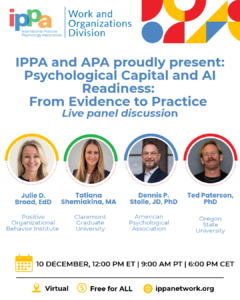
Join our upcoming IPPA/APA panel on this topic. Sign up here!
Continue the conversation through IPPA
Connect with educators, researchers, and practitioners who share your interest in putting positive psychology into practice. IPPA brings together members in more than 70 countries, with opportunities to learn and contribute through its Divisions and wider community.